
World News
Beyoncé’s Tribute to Paul McCartney: A Heartfelt Thank You for “Blackbird”
Jun
Introduction: The Power of “Blackbird” in Music History
“Blackbird,” a song written by Paul McCartney of The Beatles, is one of the most iconic and influential songs in the history of modern music. Known for its emotional depth and powerful lyrics, it has become a song of hope, freedom, and empowerment for many around the world. Over the decades, the song has been covered by numerous artists across genres, each rendition bringing a new layer of meaning to McCartney’s timeless lyrics.
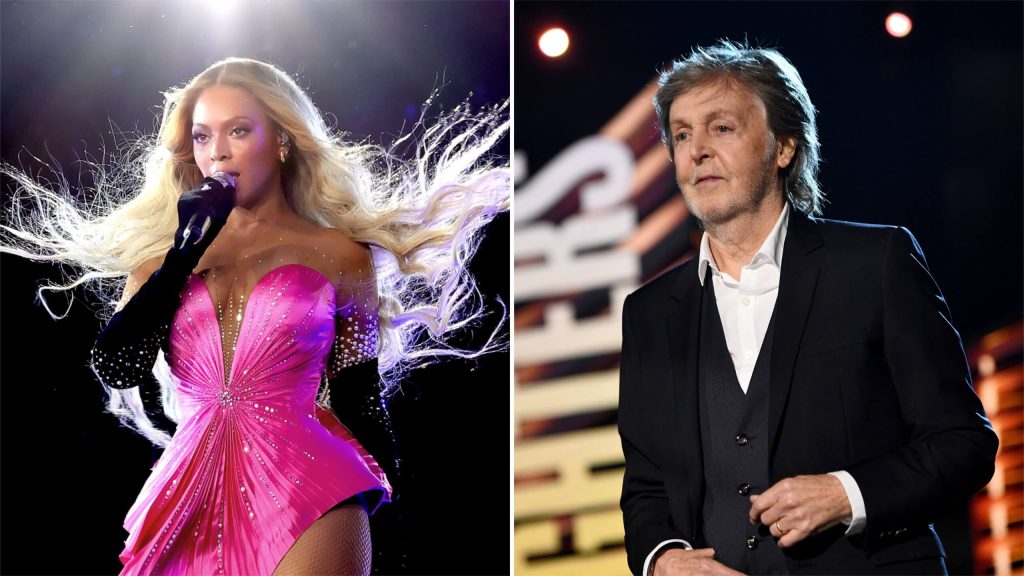
Beyoncé, one of the most influential and powerful voices in contemporary music, is no exception. Recently, the global superstar shared her heartfelt gratitude towards McCartney for writing “Blackbird,” acknowledging the deep influence the song has had on her personally and professionally. This article takes an in-depth look at Beyoncé’s tribute, the significance of “Blackbird” in both music and society, and the relationship between these two legends of the music world.

The Emotional Impact of “Blackbird” on Beyoncé
Beyoncé is known for her emotional depth and commitment to meaningful, socially-conscious music. For many artists, certain songs resonate deeply, influencing their personal and professional trajectories. For Beyoncé, “Blackbird” holds a particular place in her heart. The song, which was originally written by McCartney in 1968 during The Beatles’ “White Album” sessions, carries with it themes of liberation, resilience, and the fight for equality. These are ideals that Beyoncé has championed throughout her career.
In her recent tribute to Paul McCartney, Beyoncé expressed how “Blackbird” served as a source of comfort and inspiration. She recalled moments in her life when the song’s message of freedom and endurance helped her navigate challenges, both personal and professional. The delicate yet powerful nature of the song’s piano-driven melody, paired with its hauntingly beautiful lyrics, encapsulates feelings of overcoming adversity, which has resonated with Beyoncé’s own journey as a Black woman in the entertainment industry.
For Beyoncé, who has always spoken out about the importance of empowerment and standing up for marginalized communities, “Blackbird” represents a symbol of resilience that mirrors her own work advocating for Black rights, feminism, and social justice. The song’s enduring relevance continues to influence her music, reinforcing the idea that art can be a source of strength and healing.
Paul McCartney’s Legacy: “Blackbird” and Its Cultural Significance
While many know Paul McCartney as a member of The Beatles, his songwriting ability has proven to be nothing short of legendary. McCartney penned “Blackbird” during one of the most transformative periods of the 1960s, a time of political upheaval and social change. The song was born out of his reaction to the civil rights movement in the United States, specifically addressing the struggles of African Americans in the South during the time. Though not explicitly about race, the imagery and themes in “Blackbird” have resonated with generations of listeners, particularly those seeking to overcome oppression and injustice.
The simplicity of “Blackbird’s” arrangement — a lone acoustic guitar and McCartney’s soulful vocals — makes it a powerful and intimate piece of music. McCartney’s genius lies in his ability to take a deeply political message and turn it into something universally emotional and personal. Over the years, it has been interpreted as an anthem for freedom, equality, and social justice. Its powerful lyrics, “Blackbird fly / Into the light of the dark black night,” have spoken to countless listeners as a call to action and empowerment.
The song’s cultural significance has only deepened over time. Its influence extends beyond the music world, inspiring activists, writers, and leaders. In Beyoncé’s case, “Blackbird” was more than just a song; it was a source of inspiration that aligned with her own work, making McCartney’s creation a critical part of her musical and emotional landscape.
Beyoncé’s Musical Journey and Her Connection to McCartney’s Work
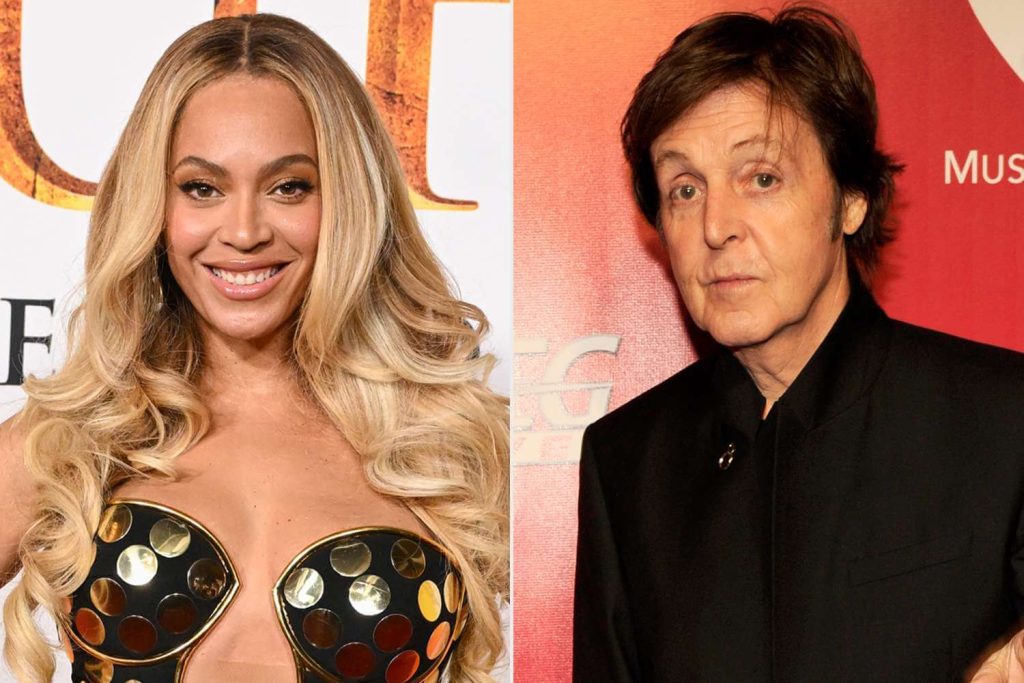
Beyoncé and Paul McCartney represent two distinct eras of music but share a deep commitment to using their art to inspire change. While McCartney revolutionized music in the 1960s with The Beatles, Beyoncé has done so in the 21st century with her solo career and her work with Destiny’s Child. Both artists have broken boundaries, challenged societal norms, and influenced entire generations.
As Beyoncé ascended to global superstardom, she drew from a diverse range of musical influences. McCartney’s work, particularly songs like “Blackbird,” has been an integral part of this musical tapestry. Beyoncé’s respect for McCartney’s legacy is evident in her tribute to the song, acknowledging that his ability to create such a moving and profound piece of art had a lasting impact on her.
Beyoncé’s musical catalog often explores themes of empowerment, love, personal growth, and resilience, much like McCartney’s songs. While she is known for her high-energy performances and her blend of pop, R&B, and hip-hop, she has also embraced the emotional depth of ballads and acoustic music — genres in which McCartney excels. In both artists’ music, there is an underlying message of overcoming adversity and finding strength, whether in personal struggles or in societal battles.
Beyoncé’s connection to McCartney’s work is also evident in her role as a cultural ambassador for social justice and equality. Just as McCartney’s “Blackbird” became a tool for social change, Beyoncé’s music and activism have encouraged her fans to push for a more just and equal society. Their shared commitment to change makes their collaboration, though indirect, one of musical unity and mutual respect.
Beyoncé’s Public Tribute: A Moment of Respect and Gratitude
Beyoncé’s decision to publicly thank Paul McCartney for writing “Blackbird” reflects the deep respect she holds for his artistry and the influence he’s had on her career. While she has expressed admiration for many artists throughout her journey, her tribute to McCartney stands out due to the emotional significance of “Blackbird.” In a world where music often serves as a source of solace, Beyoncé’s acknowledgment of McCartney’s contribution to her life highlights the transformative power of art.
Through her tribute, Beyoncé celebrated the beauty of collaboration across generations, emphasizing the shared bond that all artists have through music. Despite the decades that separate McCartney’s original recording of “Blackbird” from Beyoncé’s current influence, the connection between the two is evident. Beyoncé’s message of gratitude serves as both a personal thank you to McCartney and a public recognition of the ongoing power of music to shape and inspire lives.
In her tribute, Beyoncé not only praised McCartney for his songwriting but also celebrated the cultural importance of “Blackbird.” For her, McCartney’s creation was more than just a song — it was a tool for empowerment, an anthem that resonated with her ideals of justice, freedom, and strength. By publicly acknowledging McCartney’s work, Beyoncé highlighted the way music, when done right, can transcend time and continue to inspire future generations.
Conclusion: The Timelessness of “Blackbird” and Its Influence on Future Generations
The relationship between Beyoncé and Paul McCartney may seem like an unlikely one, but it is a reflection of the timeless and universal power of music. “Blackbird” continues to inspire artists like Beyoncé, who see in McCartney’s lyrics a message that transcends the boundaries of its time. Beyoncé’s tribute is a powerful reminder of how music can speak to the soul, foster connections between artists, and create lasting legacies.
As Beyoncé continues to lead a new generation of artists, she carries the influence of McCartney’s work with her, just as McCartney’s legacy carries the echoes of the cultural movements of the 1960s. For both artists, their music is a testament to the enduring impact of art on social change, empowerment, and healing. In thanking McCartney for writing “Blackbird,” Beyoncé not only acknowledges the song’s place in her life but also underscores the enduring relevance of songs that challenge us to think, reflect, and, ultimately, grow.
As long as “Blackbird” continues to inspire, its legacy — much like the legacies of both McCartney and Beyoncé — will live on, providing a voice for those seeking freedom, justice, and hope.
From torunstyle
